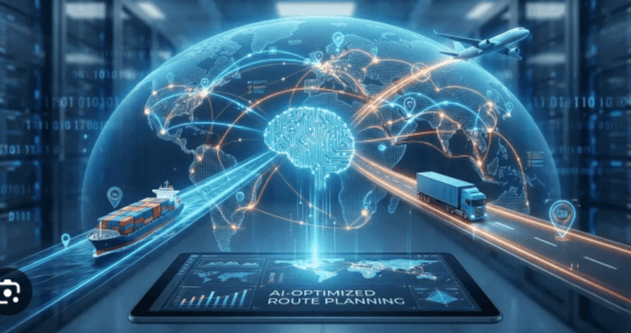
AI aggregates real-time data from transponders, weather feeds, ports, and satellites to map shipping routes. It filters signals for route optimization, latency, and congestion, presenting transparent dashboards and prioritized alerts. Anomaly detection flags deviations, while governance ensures auditable results. The system supports proactive adjustments, safer navigation, and data-driven decisions, all while preserving operational flexibility. As metrics standardize and resilience scales, stakeholders are left weighing efficiency gains against governance and risk considerations.
How AI Creates Real-Time Route Insights
AI creates real-time route insights by aggregating live data streams from vessel transponders, weather feeds, port operations, and satellite surveillance. The system evaluates anomalies, traffic density, and seasonal patterns to produce actionable guidance. Outputs are AI Driven, presenting concise risk assessments and prioritized alerts. Operators receive scalable dashboards, enabling proactive adjustments, optimized fuel use, and resilient, freedom-oriented navigation planning. Risk Alerts inform timely decisions.
From Data to Decisions: Signals That Matter
From data streams to decisive actions, the process hinges on distinguishing signals that truly impact routing risk and efficiency. Signals are filtered through objective criteria, prioritizing route optimization incentives, latency, weather, and port congestion. Anomaly detection flags deviations from baseline patterns, enabling timely interventions. Decisions rely on transparent metrics, reproducible dashboards, and disciplined validation, ensuring actions remain data-led, scalable, and free from guesswork.
Evaluating AI Solutions for Shipping Monitors
Navigation analytics provide route-informed context, while anomaly detection flags deviations efficiently.
Performance benchmarks, scalability considerations, and governance controls shape selection, ensuring reliable, auditable results that support proactive decision-making without overreliance on opaque or brittle systems.
Real-World Impacts: Safety, Efficiency, and Compliance
Real-world deployments of shipping-monitoring AI yield measurable gains in safety, efficiency, and regulatory compliance, underpinned by data-driven evidence and disciplined governance.
Observed outcomes include improved risk assessment, reduced incident latency, and clearer policy alignment across fleets.
Data streams enable transparent audits, while standardized metrics support proactive decision-making, cost control, and scalable resilience without compromising operational freedom.
Frequently Asked Questions
How Is Data Privacy Protected in Shipping Route AI Systems?
Data privacy is protected through robust security protocols, access controls, and data minimization. The system enforces encryption, audit trails, and anomaly detection, enabling trusted sharing while maintaining freedom to innovate, with independent third-party assessments ensuring ongoing compliance and transparency.
What Are the Costs of Deploying AI for Route Monitoring?
Deployment costs vary by data needs, infrastructure, and scale; thus, cost considerations depend on cloud versus on‑premises setups. Deployment challenges include integration, governance, and ongoing maintenance, with ROI influenced by model accuracy and real‑time processing benefits.
Can AI Predict Weather Disruptions Affecting Routes?
AI weather forecasting enables route disruption predictions, but data privacy, costs, and data gaps complicate outcomes; ethics and rigorous validation are essential, yet analysts see potential for independence, analytical clarity, and freedom in scalable, data-driven planning.
How Does AI Handle Data Gaps or Sensor Failures?
AI addresses data gaps and sensor failures by imputing missing values, validating streams, and applying redundancy; privacy protection and ethical implications are weighed. It analyzes weather disruption risks and ensures robust, transparent data handling for freedom-loving stakeholders.
What Are the Ethical Implications of Automated Routing Decisions?
Automated routing decisions raise ethical concerns about unintended bias and transparency; they require robust accountability mechanisms, frequent audits, and inclusive stakeholder input to ensure fairness, explainability, and alignment with shared values while preserving operational efficiency and safety.
Conclusion
In conclusion, AI-powered monitoring distills vast, heterogeneous data into actionable route insights, enabling proactive adjustments and measurable performance gains. Real-time anomaly detection and transparent dashboards support safer, more efficient navigation while maintaining governance and auditability. The approach scales with resilience, continuously refining metrics and alerts as data quality improves. As the saying goes, “The proof is in the pudding”—where outputs align with outcomes, trust and value in shipping operations are earned through demonstrable results.